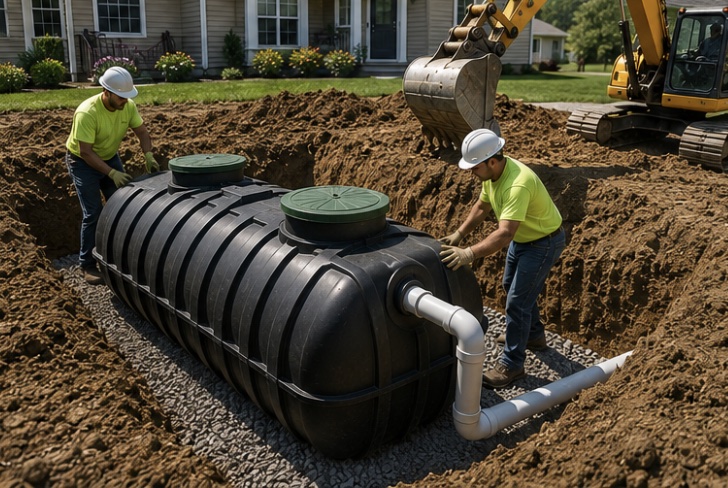
Septic Installation & Replacement in Augusta, GA
Whether you're building new or your current system has reached the end of its life, a properly designed and permitted septic system protects your property for decades.
(706) 607-6960When Replacement Makes More Sense Than Repair
- The tank has structural damage that can't be reliably repaired
- The drain field has failed completely and soil conditions won't support rejuvenation
- The system is significantly undersized for the home's current water usage
- Repeated repairs haven't resolved recurring backups
- You're adding bedrooms or fixtures that exceed the system's original design capacity
- You're building new construction without existing sewer access
The Installation Process
- Site evaluation and soil testing to determine the right system type and drain field size for the lot.
- System design and permitting through the appropriate local health/environmental authority.
- Excavation and installation of the tank, distribution box, and drain field.
- Inspection and approval before the system is covered and put into use.
- Final grading and cleanup of the work area.
Common System Types
Conventional gravity system
The standard setup for suitable soil - a tank plus a gravity-fed drain field. The most common and typically the most affordable option where soil conditions allow.
Mound system
Used when soil conditions or a high water table won't support a conventional field - the drain field is built up above natural grade instead of buried in it.
Pump-assisted system
Used when the drain field sits higher than the tank or is farther from the house than gravity alone can reach - an effluent pump moves wastewater to the field.
Aerobic treatment unit (ATU)
A more advanced system that treats wastewater more thoroughly before it reaches the drain field - often used on lots with tighter soil or space constraints.
What to Expect Timeline-Wise
From initial site evaluation to a finished, approved system, a straightforward installation on suitable soil often takes a few weeks start to finish - most of that being design and permitting, not the physical work itself, which is frequently completed in just a few days. More complex sites (poor soil, tight lots, mound or ATU systems) take longer to design and permit.
Frequently Asked Questions
- How long does a septic system last before replacement?
- A well-maintained conventional system can last 20-30+ years. Drain fields tend to be the first component to reach end of life, especially without regular pumping.
- Do I need a permit to install or replace a septic system?
- Yes, new installations and full replacements typically require permitting through the local health department or environmental health authority. A licensed provider handles the design and permitting process.
- What type of system is right for my property?
- That depends on soil conditions, lot size, and local regulations. A site evaluation and soil test are needed before recommending a conventional, mound, or alternative system type.
- Can I install a septic system myself?
- No - septic system installation requires permitting, licensed design, and inspection in virtually every jurisdiction. DIY installation risks both system failure and legal/permitting problems down the line.
- What happens if my soil doesn't pass a perc test?
- A failed percolation (perc) test doesn't necessarily mean you can't build - it usually means an alternative system type, like a mound or aerobic treatment unit, is needed instead of a conventional gravity system.
Related Reading
Other Ways We Can Help
Septic Tank Repair
Diagnosis and repair for failing septic tanks, backups, and system faults.
Drain Field Repair
Restoring drain fields (leach fields) that are saturated, clogged, or failing.
Septic Tank Pumping
Routine and emergency pumping to keep your system running and avoid backups.
Septic Inspection
Pre-sale, routine, and permit inspections with clear, honest reporting.
Emergency Septic Service
Fast response for active backups, overflows, and failing systems.
Commercial Septic Services
Septic and grease trap service for restaurants, offices, and commercial properties.